In the realm of industrial piping systems, steel elbows play a crucial role. As a dedicated steel elbow supplier, I've witnessed firsthand how these components are essential for redirecting the flow of fluids and gases. One of the most significant properties of a steel elbow is its hardness, which directly impacts its performance, durability, and suitability for various applications.
Understanding Hardness in Steel Elbows
Hardness, in the context of materials science, is the ability of a material to resist permanent deformation, such as scratching, indentation, or wear. For steel elbows, hardness is a measure of how well they can withstand the stresses and strains encountered during service. These stresses can include the pressure of the flowing medium, abrasion from particles in the fluid, and mechanical impacts.
The hardness of a steel elbow is closely related to its chemical composition and the manufacturing processes it undergoes. Steel is an alloy primarily composed of iron and carbon, with other elements such as manganese, silicon, chromium, and nickel added to enhance its properties. The carbon content, in particular, has a significant influence on the hardness of steel. Generally, higher carbon content leads to greater hardness. However, increasing the carbon content can also make the steel more brittle, so a balance must be struck to achieve the desired combination of hardness and toughness.
Measuring the Hardness of Steel Elbows
There are several methods for measuring the hardness of steel elbows, each with its own advantages and limitations. The most commonly used hardness testing methods include the Brinell, Rockwell, and Vickers hardness tests.
The Brinell hardness test involves applying a specific load to a hardened steel ball indenter pressed into the surface of the material. The diameter of the resulting indentation is measured, and the Brinell hardness number (BHN) is calculated based on the load and the surface area of the indentation. This method is suitable for testing relatively large and flat specimens and can provide an accurate measure of the average hardness of the material.
The Rockwell hardness test is a more widely used method due to its simplicity and speed. It measures the depth of penetration of an indenter (either a diamond cone or a hardened steel ball) under a minor load followed by a major load. The difference in penetration depth between the two loads is used to determine the Rockwell hardness number. There are several Rockwell scales, such as the HRA, HRB, and HRC scales, each suitable for different ranges of hardness.


The Vickers hardness test is similar to the Brinell test but uses a square-based diamond pyramid indenter. The diagonal length of the resulting indentation is measured, and the Vickers hardness number (HV) is calculated. This method is particularly useful for testing small or thin specimens and can provide a more accurate measure of hardness at a specific point on the surface.
Factors Affecting the Hardness of Steel Elbows
As mentioned earlier, the chemical composition of steel is a major factor influencing its hardness. In addition to carbon, other alloying elements can also have a significant impact. Chromium, for example, can improve the corrosion resistance and hardness of steel by forming chromium carbides. Nickel can enhance the toughness and ductility of steel, while manganese can increase its strength and hardenability.
The manufacturing processes used to produce steel elbows also play a crucial role in determining their hardness. Hot forming, which involves shaping the steel at high temperatures, can result in a more uniform grain structure and improved mechanical properties. Cold forming, on the other hand, can increase the hardness of the steel through work hardening. Heat treatment processes such as annealing, quenching, and tempering can also be used to adjust the hardness and other properties of the steel.
Importance of Hardness in Steel Elbow Applications
The hardness of a steel elbow is of utmost importance in various industrial applications. In high-pressure piping systems, such as those used in oil and gas production, chemical processing, and power generation, steel elbows need to be hard enough to withstand the internal pressure without deforming or leaking. A soft elbow may bulge or rupture under high pressure, leading to costly repairs and potential safety hazards.
In abrasive environments, such as mining, cement production, and food processing, steel elbows are exposed to particles that can cause wear and erosion. A hard elbow with good abrasion resistance can withstand the wear and tear for a longer period, reducing the frequency of replacement and maintenance.
In addition, the hardness of steel elbows also affects their machinability. For applications that require further machining, such as threading or welding, the hardness of the elbow needs to be within a certain range to ensure that the machining process can be carried out efficiently and accurately.
Our Products and Their Hardness Characteristics
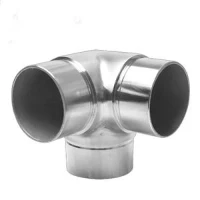
As a steel elbow supplier, we offer a wide range of products to meet the diverse needs of our customers. Our 3 Way Elbow Connector is designed for applications where the flow of fluids needs to be redirected in multiple directions. Made from high-quality steel, it has the appropriate hardness to withstand the pressure and stress of the system.
Our Straight Tee is another popular product. It is commonly used in piping systems to split or combine the flow of fluids. The hardness of our straight tees is carefully controlled during the manufacturing process to ensure they can perform reliably in various applications.
For applications that require a 90-degree change in direction, our Stainless Steel 90 Degree Elbow and 90 Degree Elbow Pipe are excellent choices. Made from stainless steel, they have good corrosion resistance and the right hardness to handle the pressure and flow of the medium.
Our Stainless Steel Tube Elbow is designed for use in tube systems. It offers high precision and durability, thanks to its appropriate hardness and excellent mechanical properties.
Contact Us for Your Steel Elbow Needs
If you are in the market for high-quality steel elbows with the right hardness for your specific application, we are here to help. Our team of experts can provide you with detailed information about our products, including their hardness characteristics, and assist you in selecting the most suitable steel elbow for your project. Whether you are working on a small-scale industrial project or a large infrastructure development, we can offer you the best solutions at competitive prices. Don't hesitate to reach out to us for more information and to start your procurement process.
References
- ASM Handbook, Volume 8: Mechanical Testing and Evaluation. ASM International.
- Callister, William D., and David G. Rethwisch. Materials Science and Engineering: An Introduction. Wiley, 2017.
- Shackelford, James F. Introduction to Materials Science for Engineers. Pearson, 2018.