Hey there! If you're in the market for flange pipe fittings, you've probably wondered about the flow capacity. Well, you're in the right place. I'm a supplier of Flange Pipe Fittings, and I'm gonna break down everything you need to know about the flow capacity of these nifty little things.
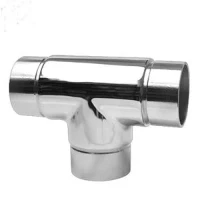
First off, let's talk about what flange pipe fittings are. They're basically connectors that join pipes together, and they come in all sorts of shapes and sizes. You've got your Straight Tee, which, as the name suggests, has a straight-through design. Then there's the Threaded Flange, which uses threads to connect to the pipe. And of course, we have the Weld Neck Flanges, Long Weld Neck Flanges, and Stainless Steel Flanges, each with its own unique features and benefits.
Now, onto the flow capacity. The flow capacity of a flange pipe fitting is basically how much fluid or gas it can handle without creating too much resistance. Think of it like a water pipe. If you've got a really narrow pipe, the water's gonna have a hard time flowing through it, and you're gonna get a low flow rate. But if you've got a wide pipe, the water can flow through more easily, and you'll get a higher flow rate. The same principle applies to flange pipe fittings.
There are a few factors that can affect the flow capacity of a flange pipe fitting. The first one is the size of the fitting. Generally speaking, the bigger the fitting, the higher the flow capacity. This is because there's more space for the fluid or gas to flow through. So, if you need a high flow rate, you'll want to go for a larger fitting.


Another factor is the shape of the fitting. Some fittings, like the Straight Tee, have a more direct path for the fluid or gas to flow through, which means less resistance and a higher flow capacity. Other fittings, like elbows or reducers, can create more turbulence and resistance, which can lower the flow capacity.
The material of the fitting also plays a role. For example, Stainless Steel Flanges are known for their smooth interior surface, which can reduce friction and improve the flow capacity. On the other hand, fittings made from materials with a rough interior surface can increase friction and lower the flow capacity.
The pressure rating of the fitting is another important consideration. If the pressure inside the pipe is too high, it can cause the fluid or gas to flow more forcefully, which can increase the flow capacity. However, if the pressure is too high for the fitting to handle, it can cause damage to the fitting, which is definitely not good. So, it's important to choose a fitting with a pressure rating that's appropriate for your application.
Now, let's talk about how you can calculate the flow capacity of a flange pipe fitting. There are a few different methods you can use, but one of the most common is the Darcy-Weisbach equation. This equation takes into account factors like the length of the pipe, the diameter of the pipe, the roughness of the pipe interior, and the velocity of the fluid or gas. It's a bit complicated, but there are plenty of online calculators that can help you do the math.
Another method is to use flow coefficient charts. These charts give you a rough estimate of the flow capacity based on the size and type of the fitting. They're not as accurate as the Darcy-Weisbach equation, but they can be a quick and easy way to get an idea of the flow capacity.
So, why is it important to know the flow capacity of a flange pipe fitting? Well, for starters, it can help you choose the right fitting for your application. If you choose a fitting with a flow capacity that's too low, you might not get the flow rate you need, which can lead to problems like reduced efficiency or even system failure. On the other hand, if you choose a fitting with a flow capacity that's too high, you might end up spending more money than you need to.
As a flange pipe fitting supplier, I can help you figure out the right fitting for your needs. I've got a wide range of products, including Straight Tee, Threaded Flange, Weld Neck Flanges, Long Weld Neck Flanges, and Stainless Steel Flanges. I can also provide you with technical support and advice to make sure you're getting the most out of your fittings.
If you're interested in learning more about our products or have any questions about flow capacity, don't hesitate to reach out. We're here to help you find the perfect flange pipe fitting for your project. Whether you're working on a small DIY project or a large industrial installation, we've got the expertise and the products to meet your needs.
In conclusion, understanding the flow capacity of a flange pipe fitting is crucial for choosing the right fitting for your application. By considering factors like size, shape, material, and pressure rating, and using the right calculation methods, you can ensure that you're getting the best possible flow rate and performance from your fittings. And if you need any help along the way, just give us a shout. We're ready to assist you with all your flange pipe fitting needs.
References:
- Fluid Mechanics textbooks
- Manufacturer's specifications for flange pipe fittings
- Online resources on pipe flow and fluid dynamics