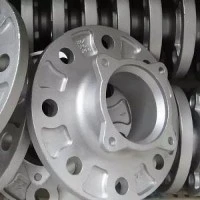
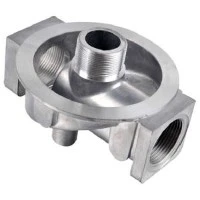
As a supplier of Aluminum Sand Castings, I've witnessed firsthand the challenges that can arise in the casting process, particularly the issue of hot tears. Hot tears, also known as hot cracking, are a significant problem in aluminum sand castings that can lead to costly rejections and production delays. In this blog, I'll delve into the problems associated with hot tears in aluminum sand castings, explore their causes, and discuss potential solutions.
Understanding Hot Tears in Aluminum Sand Castings
Hot tears occur during the solidification process of aluminum castings. As the molten aluminum cools and solidifies, it undergoes a volumetric contraction. If this contraction is restricted in any way, it can create internal stresses within the casting. When these stresses exceed the strength of the partially solidified metal, cracks form, resulting in hot tears. These cracks typically appear on the surface of the casting or within its interior and can vary in size and shape.
The presence of hot tears can have several negative impacts on the quality and performance of aluminum sand castings. Firstly, they compromise the structural integrity of the casting, reducing its strength and ductility. This can lead to premature failure of the component under service conditions, which is unacceptable in many applications, particularly those in the automotive, aerospace, and mechanical engineering industries. Secondly, hot tears can affect the dimensional accuracy of the casting. As the cracks develop, they can cause distortion of the casting, leading to parts that do not meet the required specifications. This can result in additional machining or even rejection of the entire casting.


Causes of Hot Tears in Aluminum Sand Castings
Several factors contribute to the formation of hot tears in aluminum sand castings. Understanding these causes is crucial for implementing effective preventive measures.
1. Design of the Casting
The design of the casting plays a significant role in the occurrence of hot tears. Complex geometries with sharp corners, sudden changes in section thickness, or areas of high stress concentration are more prone to hot cracking. Sharp corners can cause uneven cooling rates, leading to the development of internal stresses. Similarly, large differences in section thickness can result in differential contraction, creating additional stresses within the casting.
2. Sand Mold Properties
The properties of the sand mold, such as its thermal conductivity, mold strength, and collapsibility, can also influence the formation of hot tears. A mold with low thermal conductivity can cause the casting to cool slowly, increasing the duration of the solidification process and the likelihood of hot cracking. Additionally, if the mold is too strong and does not collapse easily during the contraction of the solidifying metal, it can restrict the natural movement of the casting, leading to the development of internal stresses.
3. Alloy Composition
The composition of the aluminum alloy used in the casting process can affect its susceptibility to hot tears. Some alloys have a higher tendency to form hot cracks due to their specific chemical composition and solidification characteristics. For example, alloys with a high content of certain elements, such as copper, can have a wider freezing range, which increases the likelihood of hot cracking.
4. Pouring Temperature and Rate
The pouring temperature and rate of the molten aluminum can also contribute to the formation of hot tears. If the pouring temperature is too high, the casting will cool more slowly, increasing the risk of hot cracking. On the other hand, if the pouring rate is too fast, it can cause turbulence in the molten metal, leading to the entrapment of gas and the formation of defects, including hot tears.
Problems Associated with Hot Tears
The problems associated with hot tears in aluminum sand castings can have far - reaching consequences for both the supplier and the customer.
1. Quality and Performance Issues
As mentioned earlier, hot tears compromise the structural integrity and dimensional accuracy of the casting. This can lead to a decrease in the overall quality of the component, which may not meet the required performance standards. For example, in automotive applications, a casting with hot tears may fail under the high - stress conditions experienced during normal operation, leading to safety risks and costly recalls.
2. Production Efficiency
The presence of hot tears in aluminum sand castings can significantly reduce production efficiency. Castings with hot tears need to be rejected or reworked, which requires additional time and resources. Reworking a casting with hot tears can be difficult and may not always be successful, leading to further delays in production and increased costs.
3. Cost Implications
Hot tears can have a substantial impact on the cost of production. Rejected castings result in wasted raw materials, energy, and labor. Additionally, the cost of reworking castings, if possible, can be high. These additional costs are ultimately passed on to the customer, which can make the final product less competitive in the market.
Solutions to Prevent Hot Tears in Aluminum Sand Castings
To address the problems associated with hot tears in aluminum sand castings, several solutions can be implemented.
1. Design Optimization
Optimizing the design of the casting can significantly reduce the risk of hot tears. This includes avoiding sharp corners and sudden changes in section thickness. Instead, smooth transitions and fillets should be used to promote uniform cooling and reduce stress concentrations. Computer - aided design (CAD) tools can be used to simulate the solidification process and identify potential areas of high stress in the casting design.
2. Sand Mold Improvement
Improving the properties of the sand mold can also help prevent hot tears. Using a sand with higher thermal conductivity can promote faster and more uniform cooling of the casting. Additionally, ensuring that the mold has sufficient collapsibility allows the casting to contract freely during solidification, reducing the internal stresses.
3. Alloy Selection
Selecting the appropriate aluminum alloy for the casting application is crucial. Alloys with a narrow freezing range and better hot - cracking resistance should be chosen. Working closely with an alloy supplier can help in finding the best alloy composition for the specific requirements of the casting.
4. Process Control
Controlling the pouring temperature and rate is essential for preventing hot tears. The pouring temperature should be carefully monitored and adjusted to ensure that it is within the optimal range for the specific alloy and casting design. Similarly, the pouring rate should be regulated to minimize turbulence in the molten metal.
Conclusion
Hot tears in aluminum sand castings are a complex and challenging problem that can have a significant impact on the quality, production efficiency, and cost of the final product. As a supplier of Aluminum Sand Castings, we are constantly striving to improve our casting processes to minimize the occurrence of hot tears. By understanding the causes of hot tears, implementing appropriate preventive measures, and continuously monitoring and optimizing our processes, we can provide our customers with high - quality aluminum sand castings that meet their exacting requirements.
If you are in the market for aluminum castings, we also offer other casting options such as Aluminum Investment Casting, Precision Die Casting, Aluminum Die Casting Parts, and Large Aluminum Casting. We are more than willing to discuss your specific needs and provide you with the best casting solutions. Feel free to reach out to us for more information and to initiate a procurement discussion.
References
- Campbell, J. (2003). Castings. Butterworth - Heinemann.
- Flemings, M. C. (1974). Solidification Processing. McGraw - Hill.
- Kalpakjian, S., & Schmid, S. R. (2013). Manufacturing Engineering and Technology. Pearson.